Pool chlorine comes in three forms that do three different jobs. Slow-dissolving tablets sit in a floater or feeder and hold a steady chlorine level all week. Shock is a fast-dissolving powder you add in one large dose to kill algae and burn off the contaminants that make water cloudy or smelly. Granules sit between the two and can be dosed daily by hand. A fourth product, stabilizer, is not chlorine at all but is what stops sunlight from destroying the chlorine you just paid for.
We went through the 40 chlorine products in our garden catalog and kept five that cover those jobs. This is a comparison of label claims and owner ratings, not a water test; we did not measure chlorine levels ourselves. Dosages below are quoted from each listing, and the label on the bucket overrides anything written here. Prices are not printed because they change daily, and every button opens the live Amazon page.
How we picked
- Owner ratings of 4.4 stars or higher with at least 3,300 ratings each, and three of the five at 4.7, so the averages reflect full pool seasons rather than one delivery.
- One product per job. Tablets for steady sanitizing, a weekly shock, a bulk shock for openings, a stabilizer and a granular chlorine for hand dosing. No two picks do the same thing.
- Label facts only. Dose per gallon, active ingredient where stated, pack size and surface compatibility are quoted from each listing; we do not restate marketing claims as results.
- Chlorine only. Algaecides, clarifiers, pH adjusters and chlorine-free shock are in neighboring categories and were left out.
The picks
Clorox Pool&Spa XTRABLUE 3” Chlorinating Tablets, Individually Wrapped, Kills Bacteria & Stops Algae (5 LB)
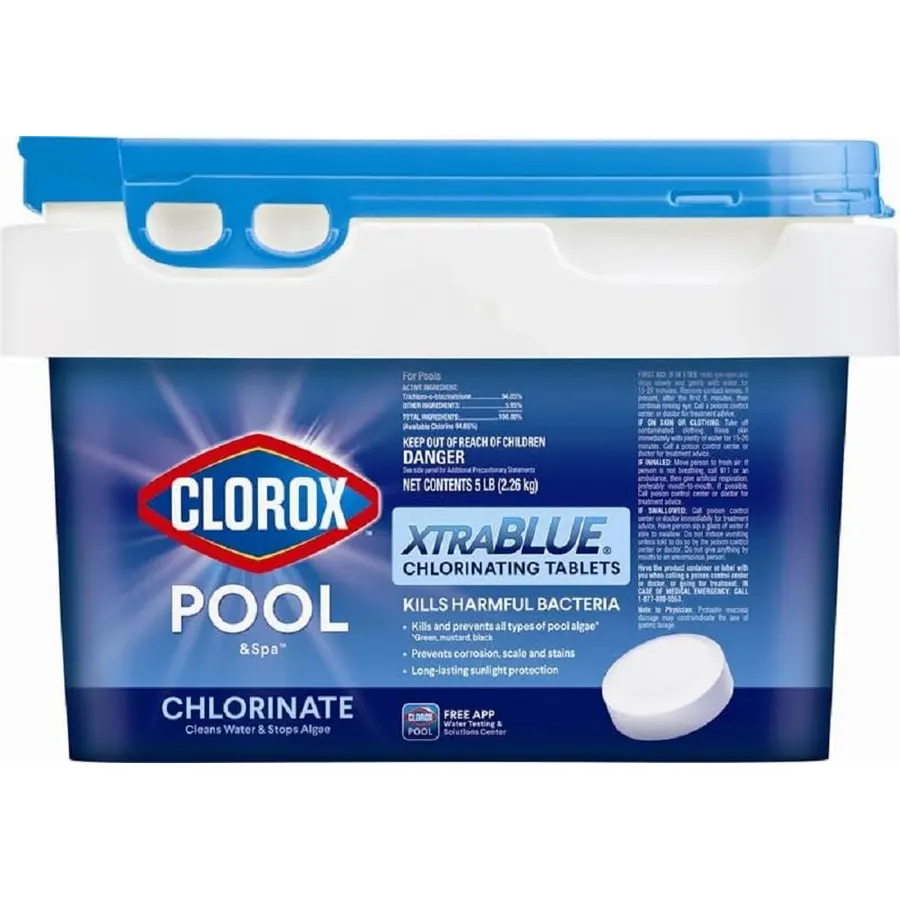
Tablets are the backbone of pool maintenance because they do the boring job without attention. Drop two of these 3-inch tablets into a floater or feeder for every 10,000 gallons, the label says, and they dissolve over the week to hold a chlorine residual. The XtraBlue formula is stabilized against sunlight, carries algae-fighting claims for green, mustard and black algae, and includes conditioners for the silky water feel Clorox advertises. Each tablet is wrapped, so a wet hand does not ruin the bucket. The label lists vinyl, plaster, fiberglass and tile as compatible surfaces.
This is one of the most-reviewed pool products on Amazon, with a 4.5-star average across more than 38,000 ratings. The thing to understand before buying any stabilized tablet is that the stabilizer (cyanuric acid) accumulates. Over a long season it can climb high enough to slow the chlorine down, which is why many owners alternate with an unstabilized cal-hypo shock like the HTH or Doheny’s below. Test strips twice a week tell you when that is happening.
- Stabilized, so sunlight burns off less chlorine between doses
- Individually wrapped tablets stay dry and are easy to handle
- Label claims algae prevention plus corrosion, scale and stain protection
- 38,700+ ratings at 4.5 stars, by far the most-reviewed pick
- Stabilizer builds up over a season; heavy tablet use can overstabilize water
- 5 lb is a few weeks of tablets for a large pool
- Tablets alone do not clear a cloudy or green pool; that is what shock is for
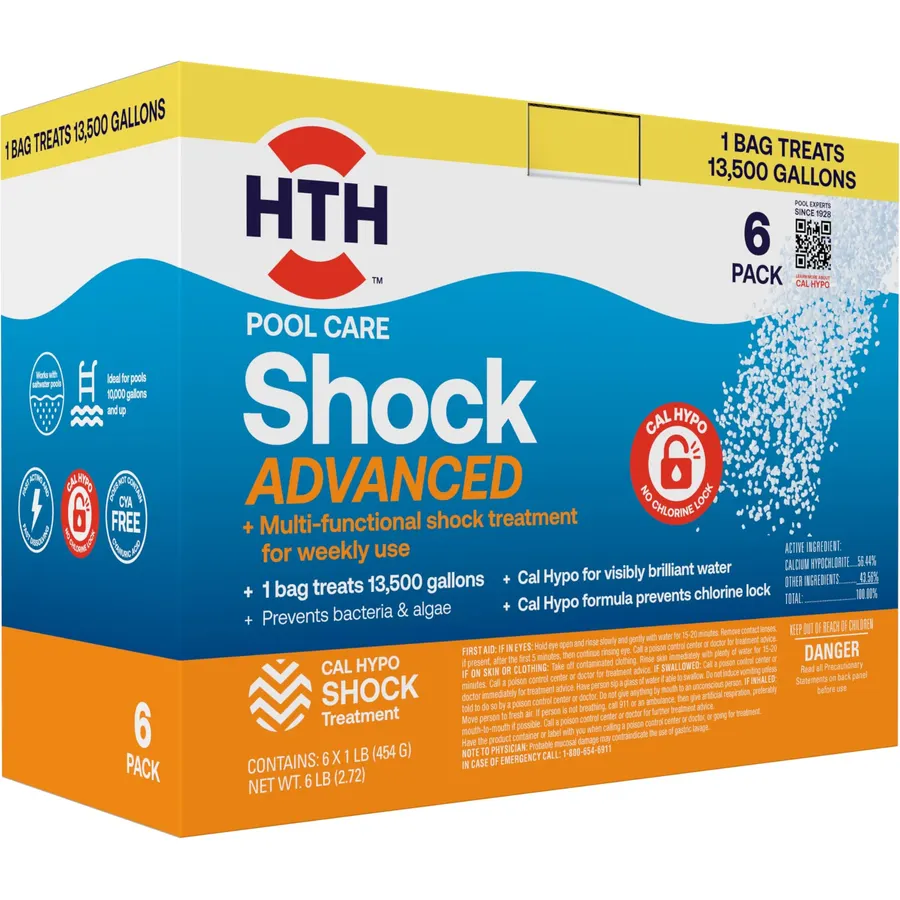
Shock is the once-a-week reset. After a pool party, a heat wave or a rainstorm, the chlorine in the water is tied up with sweat, sunscreen and debris, and a large fast dose breaks that down and restores clarity. HTH Shock Advanced is a calcium hypochlorite powder in six one-pound bags that the label describes as a 4-in-1 treatment: it kills bacteria and algae, reduces chlorine odor and irritation, and restores clarity, with the claim of solving 90 percent of water problems within 24 hours. The label specifically notes it adds no cyanuric acid, which makes it the natural partner for stabilized tablets.
Owners rate it 4.7 stars across more than 14,600 ratings, the highest-rated pick on the page alongside the stabilizer and the Doheny’s. The listing names vinyl-lined and saltwater pools as compatible and recommends HTH 6-way test strips twice a week. The practical note is that cal hypo raises calcium hardness slowly, so if your water is already hard, watch that line on the strip.
- Cal-hypo formula adds no cyanuric acid, so it will not overstabilize
- Pre-measured 1 lb bags, no scooping
- Label covers vinyl-lined and saltwater pools
- 14,600+ ratings at 4.7 stars
- Six bags is six weekly doses for a small pool, fewer for a big one
- Cal hypo adds calcium hardness over time
- Label does not print a gallons-per-bag dose in our catalog listing
Doheny's Super Pool Shock | Pro-Grade Chlorine Shock, Quick-Dissolving, Fast-Acting 68% Cal-Hypo Granular Pool Shock | 24 x 1lb Bags, Proudly Made in the USA
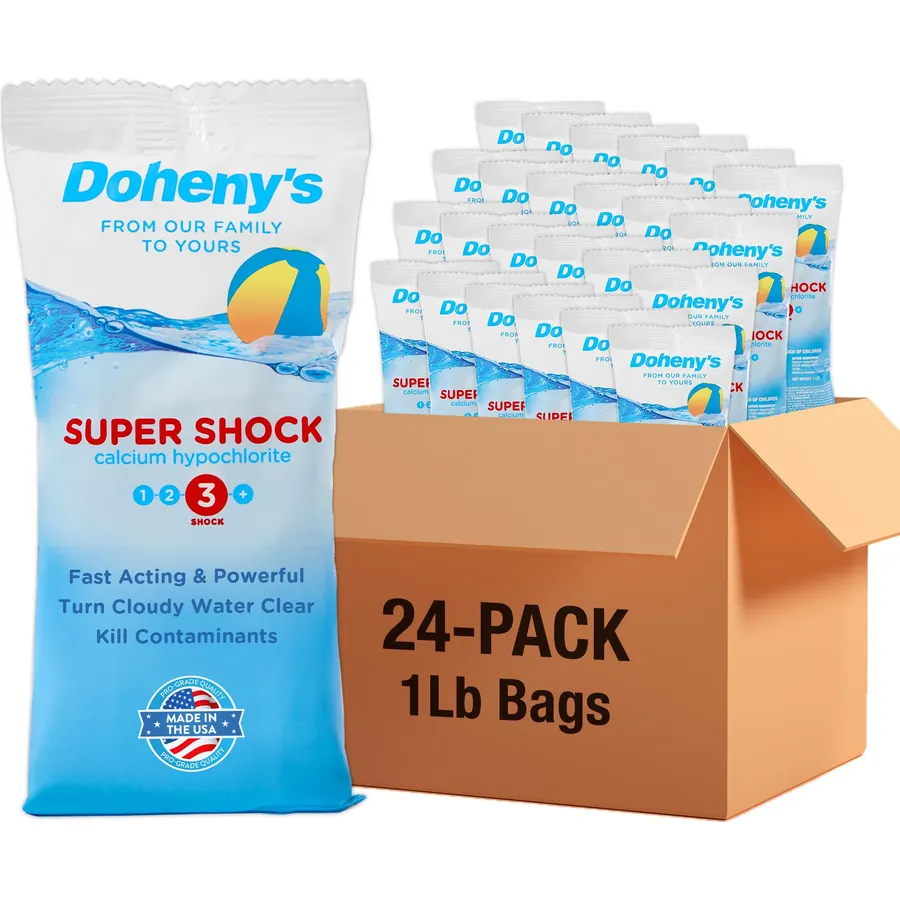
A green pool in April needs more chlorine than anyone expects, and buying shock one bag at a time gets expensive. Doheny’s packs 24 one-pound bags of 68 percent calcium hypochlorite, which the label rates at 65 percent available chlorine, with a clear dosing rule: one pound per 10,000 gallons for routine shocking, and two to three doses for spring openings or heavy algae blooms. Pre-measured bags mean no scoop and no half-used bucket absorbing moisture in the shed.
Owners rate it 4.7 stars across more than 3,300 ratings. The appeal is strength and price per pound rather than any additive; there is no stabilizer, clarifier or algaecide in the formula, just chlorine. That makes it a good match for pools that run stabilized tablets all season. As with any cal hypo, dissolve it with the pump running and expect a short period of cloudiness, and keep an eye on calcium hardness if you shock often.
- Twenty-four bags covers a full season of weekly shocks for a mid-size pool
- Label states the strength: 68% cal hypo, 65% available chlorine
- Clear dose on the label, with a 2 to 3 dose protocol for green water
- 3,300+ ratings at 4.7 stars
- Biggest outlay up front
- Cal hypo can cloud water briefly and raises calcium hardness
- Fewest ratings of the five picks
Clorox® Pool&Spa™ Swimming Pool Chlorine Stabilizer, Helps Chlorine Last Longer, Saltwater Pool Compatible, 4LB (Pack of 1)
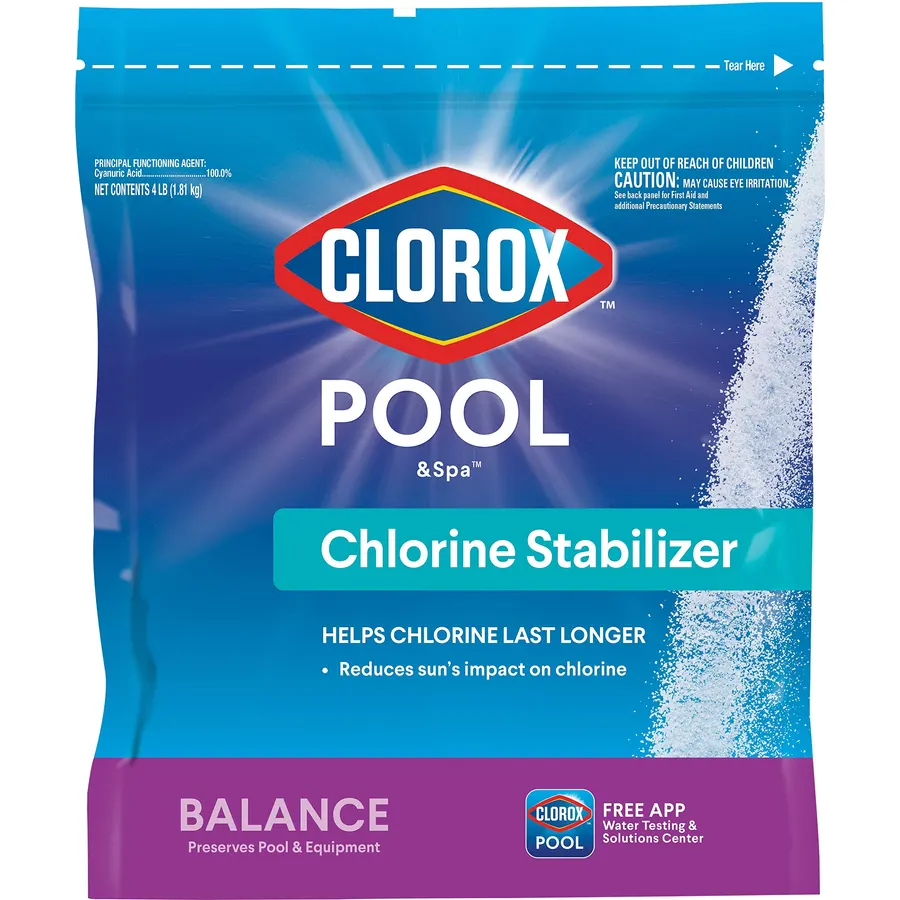
If you add chlorine on Saturday and it reads zero on Monday, sunlight is the likely thief. Chlorine stabilizer, which is cyanuric acid, bonds loosely with chlorine and shields it from UV so a dose lasts days instead of hours. This Clorox 4-pound bucket is the simplest way to raise a low stabilizer level at the start of the season, and the label singles out saltwater pools, where the salt cell produces unstabilized chlorine that burns off fast without it.
It averages 4.7 stars across more than 9,800 ratings. The important discipline is to test before adding any. Stabilized tablets like the Clorox XtraBlue already add cyanuric acid every week, so a pool running tablets may need little or none. Too much stabilizer makes chlorine sluggish, and the only fix is partial draining. The listing points to the Clorox Pool App for a dose calculation; a test strip with a stabilizer pad does the same job.
- Cuts the chlorine lost to sunlight, so tablets and shock last longer
- Essential for saltwater pools, where the cell makes unstabilized chlorine
- Small 4 lb bucket is enough for a seasonal top-up
- 9,800+ ratings at 4.7 stars
- Not a sanitizer; it does nothing on its own
- Easy to overdo, and excess stabilizer is very hard to remove without draining
- Listing gives no gallons-per-pound dose; test first and follow the label
CLOROX Pool&Spa All-in-One XtraBlue Chlorinating Granules, Kills Bacteria & Stops Algae, Blue, 6 Pounds
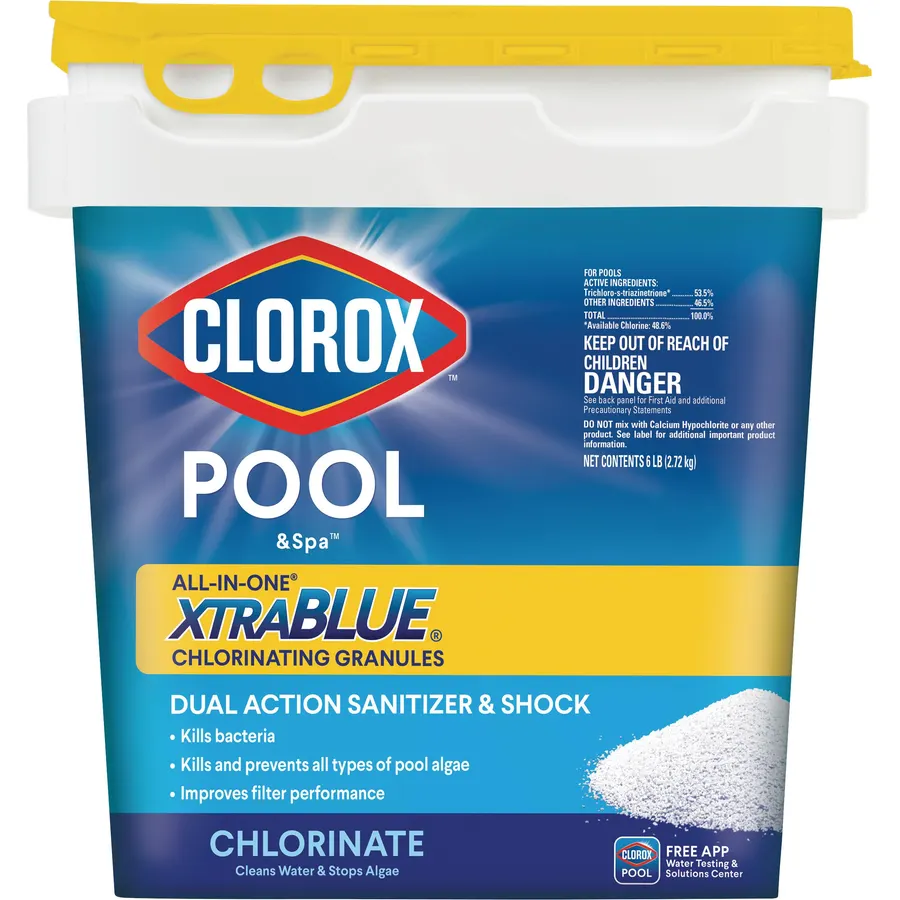
Some pool owners do not want a floater bobbing around or a feeder plumbed in; they would rather test the water each evening and add what it needs. Chlorinating granules suit that routine. The Clorox All-in-One XtraBlue granules dissolve quickly, are stabilized against sunlight, and carry the same algae claims as the tablets, with the label describing them as a sanitizer and shock in one. Scoop, broadcast across the deep end with the pump running, and the level comes up within the hour.
Owners rate them 4.4 stars across more than 4,900 ratings, the lowest average among these picks but still well above the catalog norm. The trade-off is time: granules work only as long as you keep dosing, which is daily or every other day in summer. Because they are stabilized, the cyanuric acid caution from the tablets applies here too, and a pool on granules all season should shock with an unstabilized cal hypo like the HTH or Doheny’s rather than piling on more stabilized product.
- One product for daily dosing and light shocking
- Stabilized, so no floater or feeder is required
- Quick-dissolving, label says it also aids filtration
- 4,900+ ratings at 4.4 stars
- Needs daily attention that tablets do not
- Stabilized formula adds cyanuric acid with every dose
- Lowest owner average of the five
Compare the picks
| Product | Form | Pack size | Adds stabilizer | Owner rating | Our score | |
|---|---|---|---|---|---|---|
| Clorox XtraBlue 3-inch tabletsCLOROX Pool&Spa | Tablets | 5 lb | Yes | 4.5 / 38k+ | 9.0 | See price |
| HTH Shock AdvancedHTH | Cal-hypo powder | 6 x 1 lb | No | 4.7 / 14k+ | 9.4 | See price |
| Doheny's Super Pool ShockDoheny's | 68% cal-hypo granules | 24 x 1 lb | No | 4.7 / 3.3k+ | 9.4 | See price |
| Clorox Chlorine StabilizerCLOROX Pool&Spa | Granular stabilizer | 4 lb | It is the stabilizer | 4.7 / 9.8k+ | 9.4 | See price |
| Clorox All-in-One granulesCLOROX Pool&Spa | Chlorinating granules | 6 lb | Yes | 4.4 / 4.9k+ | 8.8 | See price |
What to look for in pool chlorine
Tablets for the baseline, shock for the reset. Tablets dissolve slowly and keep a chlorine residual all week with no attention. Shock dissolves in minutes and is dosed by the pound to kill algae and oxidize the sweat, sunscreen and leaves that tie up chlorine. A pool on tablets still needs shocking; the Clorox tablet label and the HTH shock label both describe weekly use.
Know whether a product is stabilized. Stabilized chlorine (the Clorox tablets and granules here) contains cyanuric acid, which protects chlorine from the sun but accumulates. Unstabilized cal hypo (the HTH and Doheny’s shocks) adds no cyanuric acid but raises calcium hardness. Most pools do best mixing the two: stabilized tablets, cal-hypo shock, and stabilizer added only when a test says it is low.
Dose by gallons, from the label. The Clorox tablets say two tablets per 10,000 gallons per week. Doheny’s says one pound per 10,000 gallons, two to three doses for a green pool. If you do not know your pool volume, length times width times average depth in feet, times 7.5, is a close enough figure for a rectangular pool.
Check the surface and system compatibility line. The Clorox tablets list vinyl, plaster, fiberglass and tile; HTH Shock Advanced lists vinyl-lined and saltwater pools; the Clorox stabilizer is labeled for salt pools. Undissolved granules of any brand sitting on a vinyl liner can bleach it, which is why every label says to add with the pump running and brush anything that settles.
Buy test strips with the chlorine. Every one of these labels assumes you are testing: HTH recommends 6-way strips twice a week and a free chlorine range of 1 to 4 ppm. Without a strip you cannot tell a stabilizer problem from a chlorine problem, and they look identical from the deck.
How many chlorine tablets should I put in my pool?
The Clorox XtraBlue label says two 3-inch tablets per week for every 10,000 gallons, added to a floater, feeder or skimmer basket, with more as needed to hold a free chlorine reading of 1 to 4 ppm on a test strip. Adjust to the strip, not the calendar.
What is the difference between pool shock and chlorine tablets?
Tablets dissolve slowly over a week to hold a steady chlorine level. Shock is a fast-dissolving powder added in one large dose, about one pound per 10,000 gallons, to kill algae and burn off contaminants that cloud the water. Pools on tablets still need shocking weekly or after heavy use.
Do I need chlorine stabilizer if I use stabilized tablets?
Often not. Stabilized tablets and granules add cyanuric acid with every dose. Test the stabilizer level first; add the Clorox stabilizer only if it reads low, which is most common at spring opening, after heavy rain or in saltwater pools where the cell makes unstabilized chlorine.
How much pool shock do I need to open a green pool?
The Doheny's label calls for two to three doses of one pound per 10,000 gallons for spring openings or heavy algae. Add with the pump running, brush the walls, and retest the next day; repeat until the water holds chlorine overnight.
Bottom line
Run the Clorox XtraBlue 3-inch tablets in a floater for the everyday chlorine level, shock weekly with HTH Shock Advanced, and keep a bucket of Clorox Chlorine Stabilizer for the start of the season or for a saltwater pool. Buy the 24-bag Doheny’s Super Pool Shock if you open a green pool every spring or shock a large pool often, and choose the Clorox All-in-One granules if you would rather dose by hand each evening than run a floater. Test twice a week, and let the strip, not the bucket, tell you what to add.
Prices and stock change daily. The buttons above open Amazon so you always see the current price. We may earn a commission if you buy through them, at no extra cost to you.
Do Best Deal is a participant in the Amazon Services LLC Associates Program. As an Amazon Associate we earn from qualifying purchases. If you buy through links on this site we may earn a commission, at no extra cost to you. Learn more.