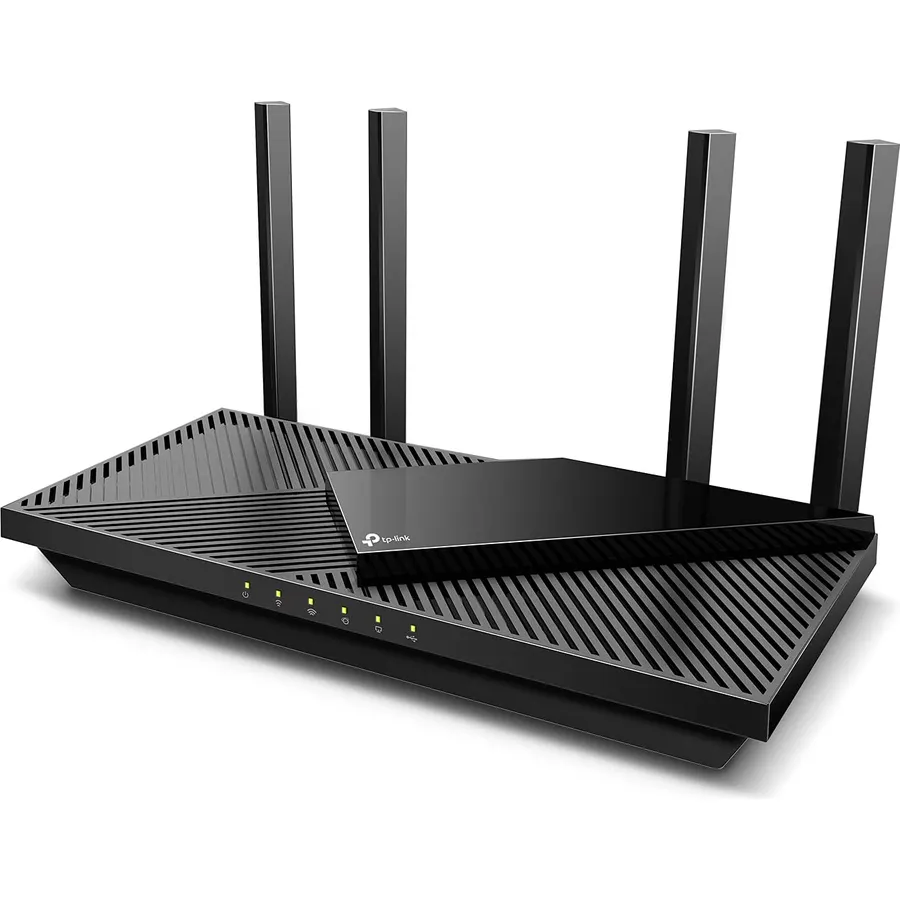
WiFi 7 (802.11be) is the first wireless standard in years that changes how a router behaves rather than just how fast it peaks. Multi-Link Operation lets a phone or laptop talk on two bands at once, 4K-QAM packs 20 percent more data into each transmission, and 320MHz channels on the 6GHz band give tri-band models a lane that nothing older can use. The catch is that the cheap end of the market is dual-band WiFi 7 with no 6GHz radio at all, so you need to know which kind you are buying. We ranked the WiFi 7 routers in our networking catalog by bands and streams, multi-gig port count, rated coverage, processor and extras such as VPN and mesh support, and what thousands of owners report after months of use.
We have not benchmarked every one of these ourselves; the verdicts rest on the spec sheets and on the owner review history. Prices are not printed because they change daily; every button opens the live Amazon page. If you do not own any WiFi 7 devices yet, our budget WiFi 6 routers guide covers cheaper options that will still feel fast, and anyone with a multi-gig plan should also read our USB-C docks and hubs guide for a 2.5G adapter to match.
How we picked
- Real WiFi 7 features. Every pick supports Multi-Link Operation and 4K-QAM; we marked which ones add the 6GHz band and 320MHz channels.
- At least one 2.5G port. A gigabit-only WAN port wastes a WiFi 7 radio, so every pick has a 2.5G WAN at minimum.
- Rated coverage of 2,000 square feet or more, with mesh expansion (EasyMesh, AiMesh or Orbi) for bigger homes.
- Security without a subscription where possible; we note which brands put parental controls behind a plan.
- Owner ratings of 4.0 stars or better, most with more than a thousand reviews.
The picks
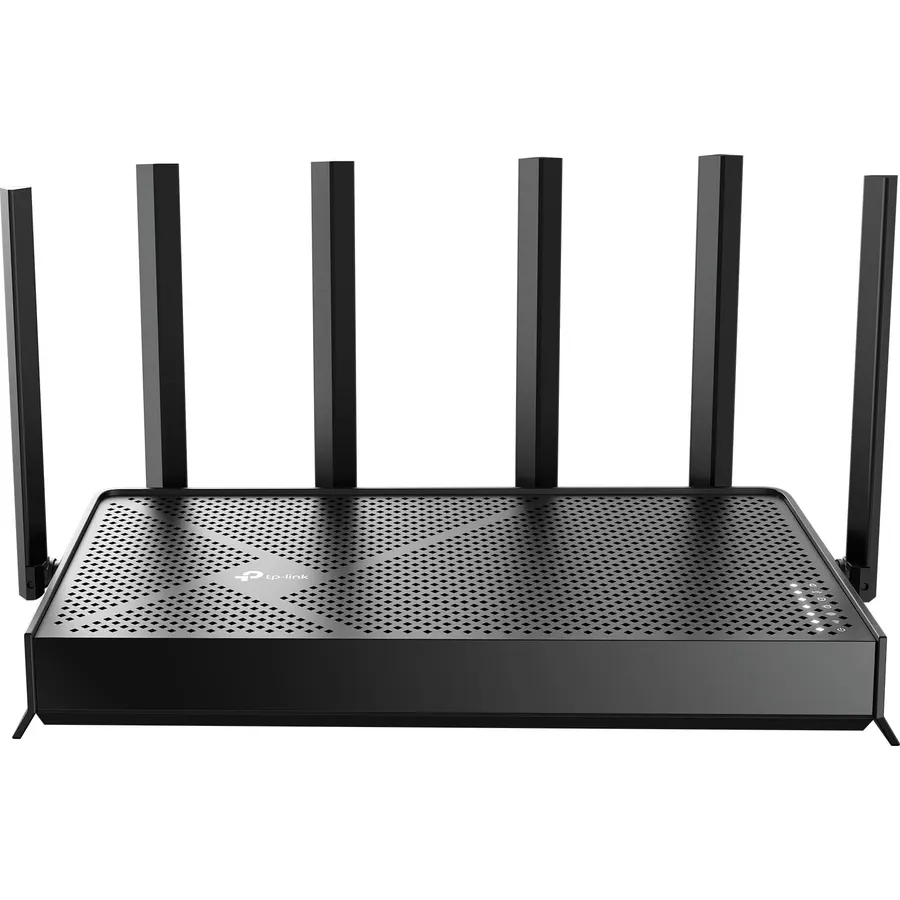
The Archer BE400 is the sweet spot of the WiFi 7 market: a dual-band router with six streams instead of the usual four, so its 5GHz band is rated at 5764 Mbps and has the headroom to serve a busy household, and two 2.5G ports so a multi-gig modem and a wired desktop can both run above gigabit. It supports Multi-Link Operation and 4K-QAM for WiFi 7 phones and laptops, covers a claimed 2,400 square feet for up to 90 devices, and can grow into a mesh with EasyMesh extenders. What it does not have is a 6GHz radio, which is the trade for its price; owners who care more about reliability than peak numbers rate it 4.3 stars across 1,600 reviews. For a two- to four-bedroom home on a 1 to 2.5 Gbps plan it is the router to beat.
- Six streams on 5GHz, more than any other dual-band pick here
- Two 2.5G ports for a multi-gig modem and a fast PC or NAS
- 1,600 owners at 4.3 stars
- EasyMesh lets you add extenders later
- No 6GHz band, so no 320MHz channels
- HomeShield advanced parental controls need a subscription
- Six antennas make it a large router to hide
NETGEAR Nighthawk WiFi 7 Router RS90, Up to 2,000 sq ft, 3.6 Gbps
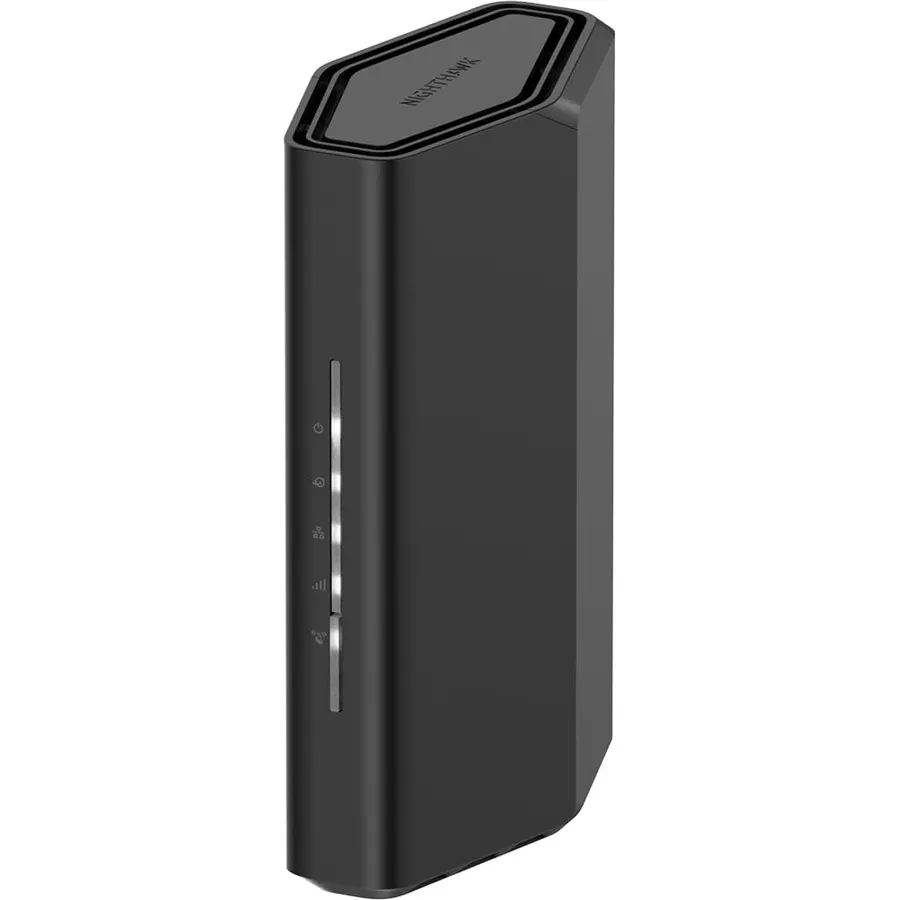
The Nighthawk RS90 is the entry ticket to WiFi 7 and it does not feel like a compromise. You get dual-band BE3600 with Multi-Link Operation, a 2.5G WAN port so a multi-gig cable or fiber modem is not throttled, and Netgear’s Nighthawk app, which is one of the easiest setups in the business. Coverage is rated at 2,000 square feet for 50 devices, which suits an apartment or a mid-size single-storey home. The economies are visible: the four LAN ports are gigabit, there is no 6GHz radio, and Netgear keeps its Armor security suite and the deeper parental controls behind a subscription. Owners do not seem to mind; 1,550 of them rate it 4.3 stars, the same as the BE400 above. If the budget is tight and the home is not huge, buy this.
- The cheapest route to WiFi 7 from a major brand
- 2.5G WAN port unlocks multi-gig plans
- 1,550 owners at 4.3 stars
- Simple Nighthawk app setup
- Four LAN ports are gigabit only
- No 6GHz band
- Netgear Armor security and advanced parental controls are paid
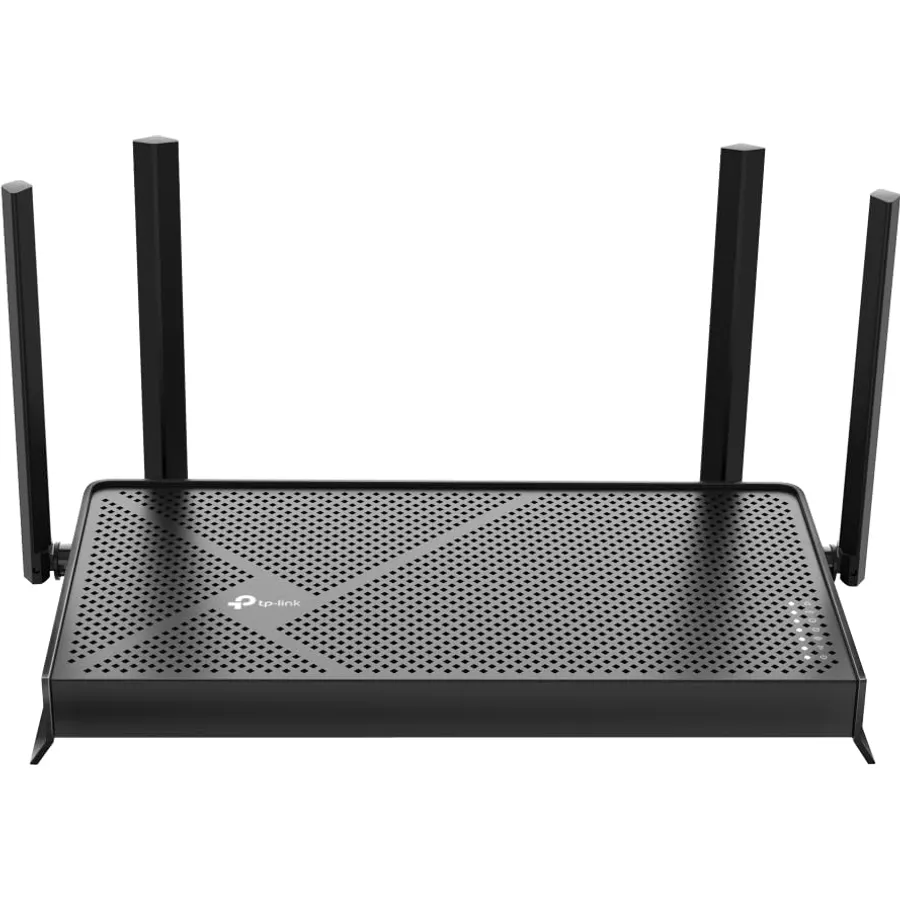
The Archer BE230 is the budget pick for anyone who needs two multi-gig ports rather than one: it has a 2.5G WAN/LAN and a 2.5G LAN, so a 2 Gbps fiber plan and a wired gaming PC can both run flat out. The 2.0GHz quad-core processor is a class above most routers at this price and keeps latency low when the network is busy, and the WiFi 7 feature set (MLO, Multi-RU, 4K-QAM) is complete for a dual-band model. It is physically small with internal antennas, which limits rated coverage to 2,000 square feet, and like every router at this price it has no 6GHz radio. With 1,650 reviews it is the most-rated WiFi 7 router in our catalog, averaging 4.2 stars; the odd firmware complaint from early buyers appears to have faded with updates.
- Two 2.5G ports at the lowest price on this page
- 2.0GHz quad-core CPU is unusually strong for the money
- The most-reviewed WiFi 7 router here at 1,650 owners
- EasyMesh expansion
- Four internal antennas; rated 2,000 sq ft
- No 6GHz band
- 4.2 stars: a few owners report firmware quirks early on
GL.iNet GL-BE9300 Flint 3 Tri-Band Wi-Fi 7 Router 5 x 2.5G VPN Router
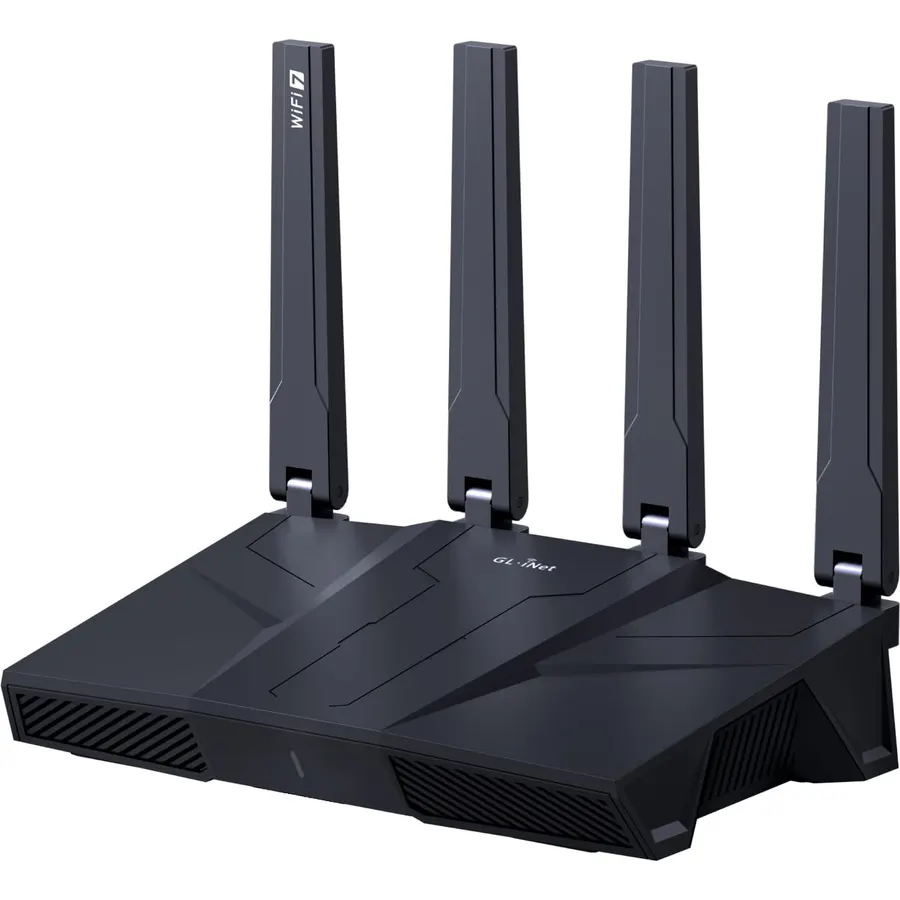
The Flint 3 is the WiFi 7 router for people who like to tinker, and it is also the best-rated one on this page at 4.4 stars from 1,060 owners. It is a true tri-band BE9300 with a 6GHz radio, it has five 2.5G Ethernet ports where most rivals offer one or two, and its OpenWrt-based firmware runs WireGuard and OpenVPN at up to 680 Mbps, fast enough to put the whole house behind a VPN without noticing. AdGuard Home is built in for network-wide ad blocking, and the hardware has room for plugins. The interface is more technical than a consumer app, there are no slick family controls, and GL.iNet is a smaller company than Netgear or TP-Link. For a home office, a privacy-minded household or anyone who wants real control over their network, nothing else here comes close for the money.
- Five 2.5G ports, the most multi-gig ports under the RS700S
- Full-speed VPN client and server built in
- AdGuard Home ad and tracker blocking on the router
- 1,060 owners at 4.4 stars, the best-rated WiFi 7 router here
- OpenWrt interface is more technical than TP-Link or Netgear apps
- No ISP-style parental controls out of the box
- Smaller brand with a smaller support network
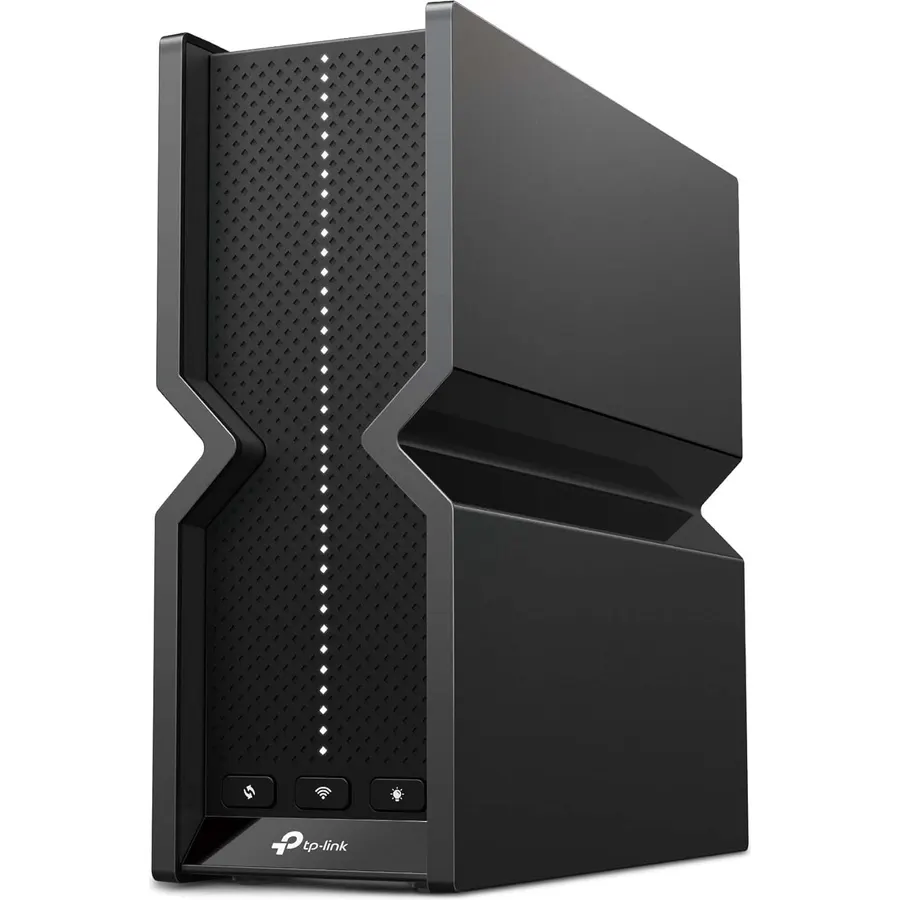
The Archer BE550 was one of the first affordable tri-band WiFi 7 routers, and it still has the best port layout in its price band: one 2.5G WAN plus four 2.5G LAN, so every wired device can run at multi-gig speed. The 6GHz band supports 320MHz channels and 4K-QAM for 5760 Mbps to a WiFi 7 laptop in the same room, and MLO lets devices combine bands. It is EasyMesh-compatible and runs TP-Link HomeShield. The caveat is its rating: 4.0 stars from 1,800 owners is the lowest here, and the review history shows early firmware instability that later updates addressed, so update it on day one. If you want 6GHz and five multi-gig ports without paying flagship money, it is still the one to buy.
- Full 6GHz band with 320MHz channels at a mid price
- Five 2.5G ports in total
- The most-reviewed tri-band WiFi 7 router here at 1,800 owners
- EasyMesh for later expansion
- 4.0 stars, the lowest on this page; early firmware drew complaints
- 6GHz range is short through walls, as on all tri-band routers
- HomeShield Pro features need a subscription
NETGEAR Nighthawk WiFi 7 Router RS700S, Up to 3,500 sq ft, 19 Gbps
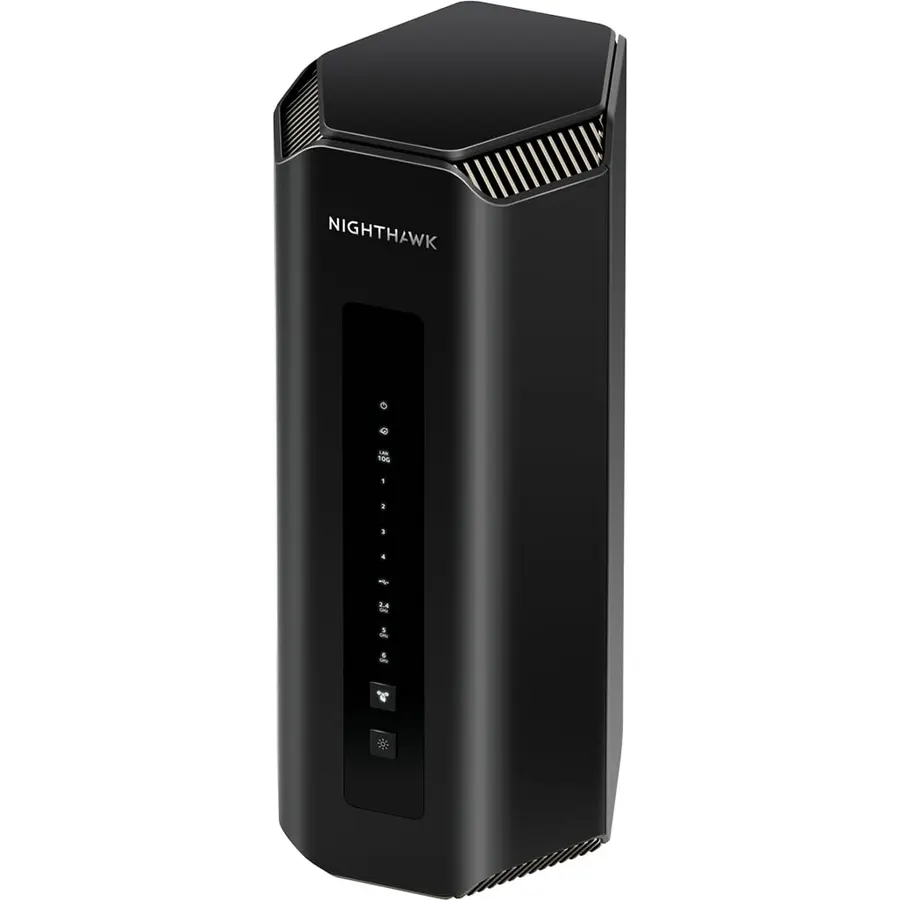
The RS700S is the router to buy when your internet plan is faster than your network. It has a 10G WAN port and a 10G LAN port, a 12-stream tri-band radio rated at 19 Gbps combined with 320MHz channels on 6GHz, and Netgear claims 3,500 square feet and 200 devices from a single unit, which is more than many two-piece mesh kits. The Nighthawk app keeps setup simple. The compromises are the price, which is in flagship territory, and a port mix that gives you two 10G ports and then drops to gigabit for the rest, so a 2.5G NAS or PC needs a switch. Netgear Armor is a subscription after the trial. For a large home on multi-gig fiber it is the single-box answer, and 950 owners rate it 4.4 stars.
- 10G WAN and 10G LAN for premium fiber plans
- 12 streams and 3,500 sq ft of rated coverage
- 950 owners at 4.4 stars
- Handles up to 200 devices
- Priced like a small mesh system
- Only one 10G LAN; the other four ports are gigabit
- Armor security is a paid add-on after the trial
ASUS RT-BE88U WiFi 7 Router - x2 10G Ports, Up to 7.2 Gbps, Mesh Compatible
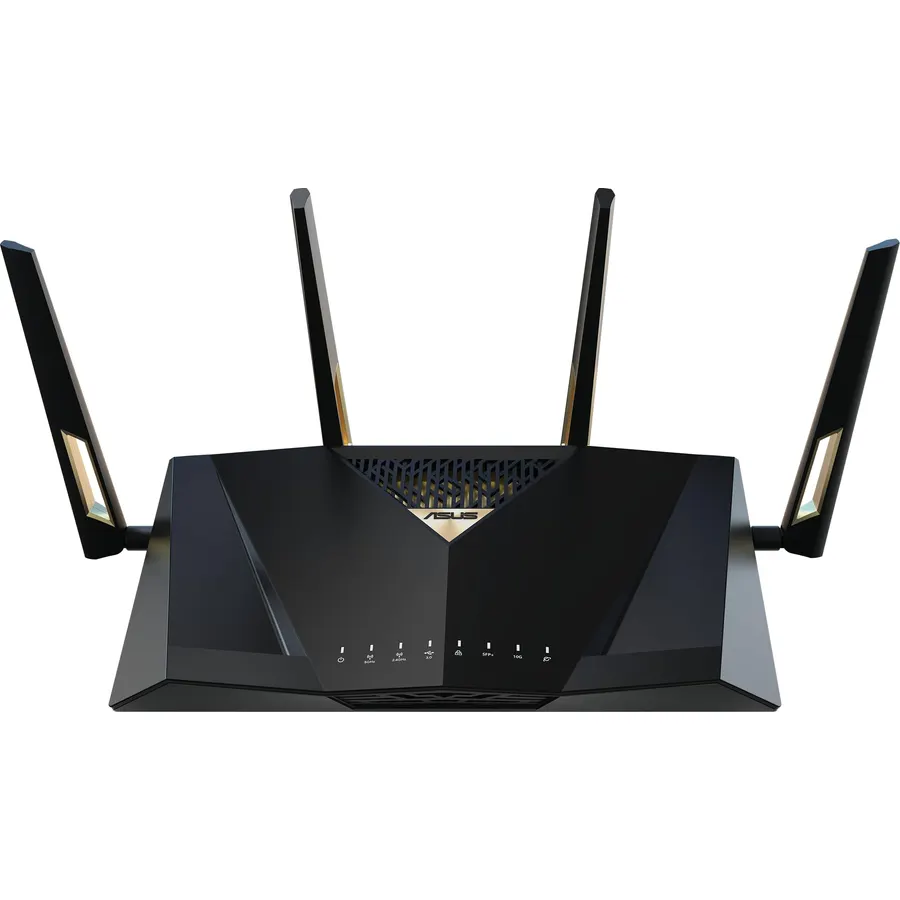
The RT-BE88U is an unusual router: ASUS spent the budget on wiring rather than a third radio. It has a 10G SFP+ port for fiber, a 10G copper WAN/LAN port and up to nine LAN ports in total for 34 Gbps of combined wired capacity, which means a home lab, a NAS and a couple of gaming PCs can all plug straight in with no switch. A 2.6GHz quad-core CPU runs dual-band BE7200 WiFi 7 with MLO, and ASUS throws in lifetime AiProtection Pro security, five SSIDs through Guest Network Pro, full VPN support including site-to-site, and AiMesh expansion. The thing it lacks is 6GHz, so wireless peak speeds trail the tri-band picks. For a wired-first household it is the most capable box here, rated 4.3 stars by 440 owners.
- 10G SFP+ plus a 10G copper port, rare at any price
- Up to nine LAN ports replaces a separate switch
- Lifetime AiProtection Pro, no subscription
- 440 owners at 4.3 stars
- Dual-band only: no 6GHz despite the price
- Big, flat chassis needs shelf space
- Fewer reviews than the Netgear and TP-Link picks
NETGEAR Nighthawk WiFi 7 Router RS140, Up to 2,250 sq ft, 5 Gbps
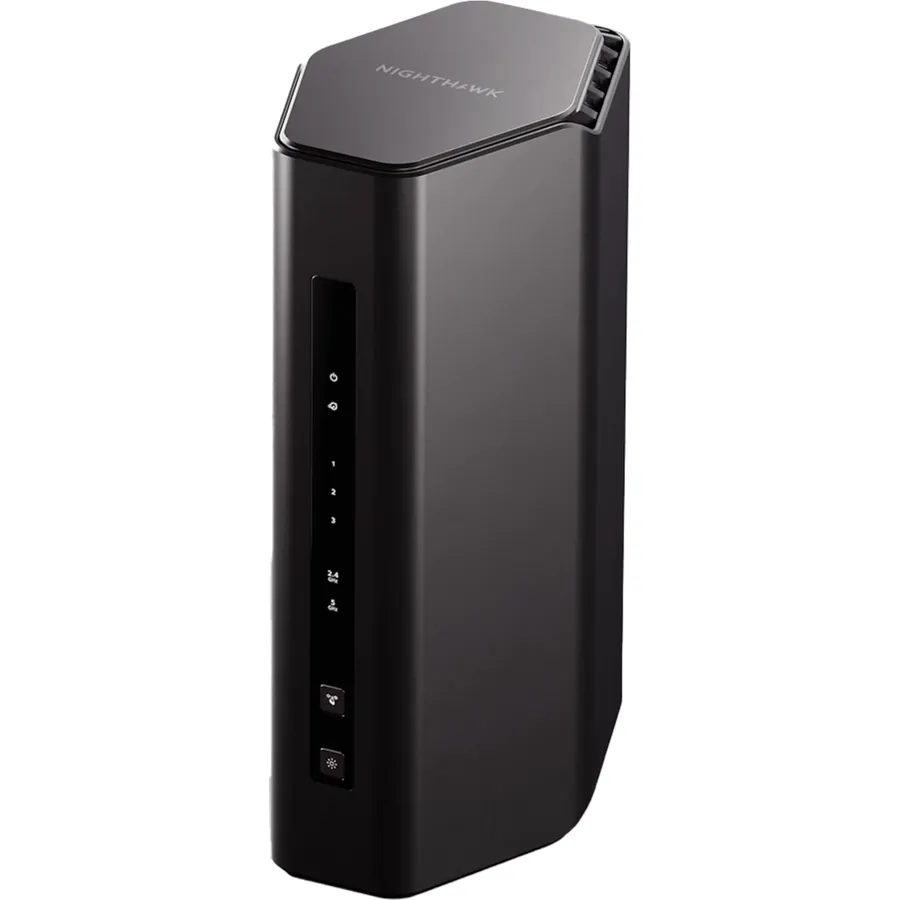
The RS140 slots between the two cheaper Nighthawks and the RS700S: dual-band BE5000 rated at 5 Gbps combined, coverage up to 2,250 square feet and capacity for 80 devices, with a 2.5G WAN port and the familiar Nighthawk app. It is a sensible upgrade over the RS90 for a larger family home where device count, not peak speed, is the problem. The port selection is its weak point, with just three gigabit LAN ports and no second multi-gig port, which is why the TP-Link BE400 outranks it at a similar price. There is no 6GHz radio either. It has 420 reviews at 4.2 stars, consistent with the rest of the Nighthawk range, and it is the right choice for Netgear loyalists who have outgrown the RS90 but do not need 10G.
- More speed and coverage than the RS90 for a modest step up
- Rated for 80 devices
- Netgear app and support
- 420 owners at 4.2 stars
- Only three LAN ports, all gigabit
- No 6GHz band
- TP-Link BE400 offers more ports for similar money
Compare the picks
| Product | Bands | Multi-gig ports | Rated coverage | Mesh | Owner rating | Our score | |
|---|---|---|---|---|---|---|---|
| TP-Link Archer BE400TP-Link | Dual-band BE6500 | 2 x 2.5G | 2,400 sq ft / 90 devices | EasyMesh | 4.3 (1,600+) | 8.6 | See price |
| Netgear Nighthawk RS90NETGEAR | Dual-band BE3600 | 1 x 2.5G | 2,000 sq ft / 50 devices | Standalone | 4.3 (1,550+) | 8.6 | See price |
| TP-Link Archer BE230TP-Link | Dual-band BE3600 | 2 x 2.5G | 2,000 sq ft / 60 devices | EasyMesh | 4.2 (1,650+) | 8.4 | See price |
| GL.iNet Flint 3GL.iNet | Tri-band BE9300, 6GHz | 5 x 2.5G | Long range / 100+ devices | OpenWrt | 4.4 (1,060+) | 8.8 | See price |
| TP-Link Archer BE550TP-Link | Tri-band BE9300, 6GHz | 5 x 2.5G | Not stated | EasyMesh | 4.0 (1,800+) | 8.0 | See price |
| Netgear Nighthawk RS700SNETGEAR | Tri-band BE19000, 6GHz | 2 x 10G | 3,500 sq ft / 200 devices | Standalone | 4.4 (950+) | 8.8 | See price |
| ASUS RT-BE88UASUS | Dual-band BE7200 | 10G SFP+ and 10G copper | Not stated | AiMesh | 4.3 (440+) | 8.6 | See price |
| Netgear Nighthawk RS140NETGEAR | Dual-band BE5000 | 1 x 2.5G | 2,250 sq ft / 80 devices | Standalone | 4.2 (420+) | 8.4 | See price |
Dual-band or tri-band WiFi 7?
Dual-band WiFi 7 routers (BE400, BE230, RS90, RS140, RT-BE88U) have 2.4GHz and 5GHz radios only. You still get Multi-Link Operation and 4K-QAM, so WiFi 7 devices gain stability and about 20 percent more throughput, but there are no 320MHz channels because those live on 6GHz. Tri-band models (Flint 3, BE550, RS700S) add the 6GHz band, which is empty of interference and can deliver multi-gigabit speeds to a WiFi 7 laptop in the same room, but 6GHz fades fast through walls. If your internet plan is 1 to 2 Gbps and your home is ordinary, dual-band WiFi 7 is enough; buy tri-band if you have a 5 Gbps or faster plan or move large files between local machines.
Ports matter more than the box number
A WiFi 7 router with a single gigabit WAN port cannot pass more than about 940 Mbps to anything, so the first spec to check is the WAN port. Every pick here has at least 2.5G; the Flint 3 and BE550 have five 2.5G ports, the RS700S has two 10G ports, and the ASUS RT-BE88U has 10G SFP+ plus 10G copper and up to nine LAN ports. Think about what you will wire: a NAS, a desktop and a games console each benefit from a 2.5G port, and a router with only one multi-gig port will need a 2.5G switch beside it.
Mesh and expansion
Large or multi-storey homes will outgrow any single router. TP-Link’s EasyMesh (BE400, BE230, BE550) and ASUS AiMesh (RT-BE88U) let you add a compatible extender or second router later and keep one network name. Netgear’s Nighthawks are standalone and the company points bigger homes toward Orbi, which is a different ecosystem. The GL.iNet Flint 3 can act as an access point or mesh node with other GL.iNet routers through OpenWrt. If you already know one router will not cover the house, our budget WiFi 6 routers guide includes mesh-ready options at lower prices.
Is WiFi 7 worth it if I do not have WiFi 7 devices?
Partly. WiFi 7 routers are backward compatible and bring newer processors and 2.5G ports, so older devices get a more responsive network. The headline speed gains need a WiFi 7 phone or laptop, which most 2025 and 2026 flagships are.
What is Multi-Link Operation?
MLO lets a WiFi 7 device connect on two bands at the same time, either combining them for speed or switching instantly to avoid interference. It is the main reason WiFi 7 feels smoother in busy homes, and every pick here supports it.
Do I need the 6GHz band?
Only for the fastest local transfers or plans above 2.5 Gbps. The 6GHz band is fast but short range. For streaming, gaming and video calls on a 1 to 2 Gbps plan, a dual-band WiFi 7 router is enough.
Will a WiFi 7 router work with my cable or fiber modem?
Yes. All of these connect to an existing modem or ISP gateway over Ethernet. If the gateway has its own WiFi, put it in bridge mode so the new router handles routing. Combo units with a built-in modem are a different category.
Which WiFi 7 router is best for a VPN?
The GL.iNet Flint 3, which runs WireGuard and OpenVPN at up to 680 Mbps on OpenWrt firmware. The ASUS RT-BE88U is the strongest consumer-brand alternative with full VPN client and server support.
Prices and stock change daily. The buttons above open Amazon so you always see the current price. We may earn a commission if you buy through them, at no extra cost to you.
Do Best Deal is a participant in the Amazon Services LLC Associates Program. As an Amazon Associate we earn from qualifying purchases. If you buy through links on this site we may earn a commission, at no extra cost to you. Learn more.