A UPS, or uninterruptible power supply, is a battery and a surge protector in one box that sits between the wall and your computer. When the power flickers or fails, the battery takes over in milliseconds, so the PC keeps running long enough to save your work and shut down cleanly, the router stays online, and the NAS does not corrupt a drive. The right size depends on what you plug in: a router and modem need a tiny unit; a gaming PC with a power-hungry graphics card and a monitor needs a 1500VA unit with a pure sine wave output. We ranked the UPS units in our accessories catalog by capacity in volt-amps and watts, output waveform, outlet count, runtime at a realistic load, battery replaceability and what thousands of owners report after years of ownership.
We have not run these through blackouts ourselves; the verdicts rest on the spec sheets and on the owner review history, which for the APC and CyberPower picks spans a decade. Prices are not printed because they change daily; every button opens the live Amazon page. If you only need surge protection without a battery, our surge protectors guide covers that, and for the PC side of the equation, see power supplies for gaming PCs.
How we picked
- Honest capacity. We list both VA and watts, because the watt figure is the one that decides whether your PC will run on battery.
- Waveform matched to the load. Pure sine wave for gaming PCs, workstations and anything with an Active PFC power supply; simulated sine wave is fine for routers, modems and basic desktops.
- Enough outlets of each kind, and we note how many are battery-backed versus surge-only.
- A replaceable battery, or a lithium battery rated for a decade, so the unit outlives its first cell.
- Owner ratings of 4.3 stars or better from at least several hundred owners, with the APC and CyberPower picks in the thousands.
The picks
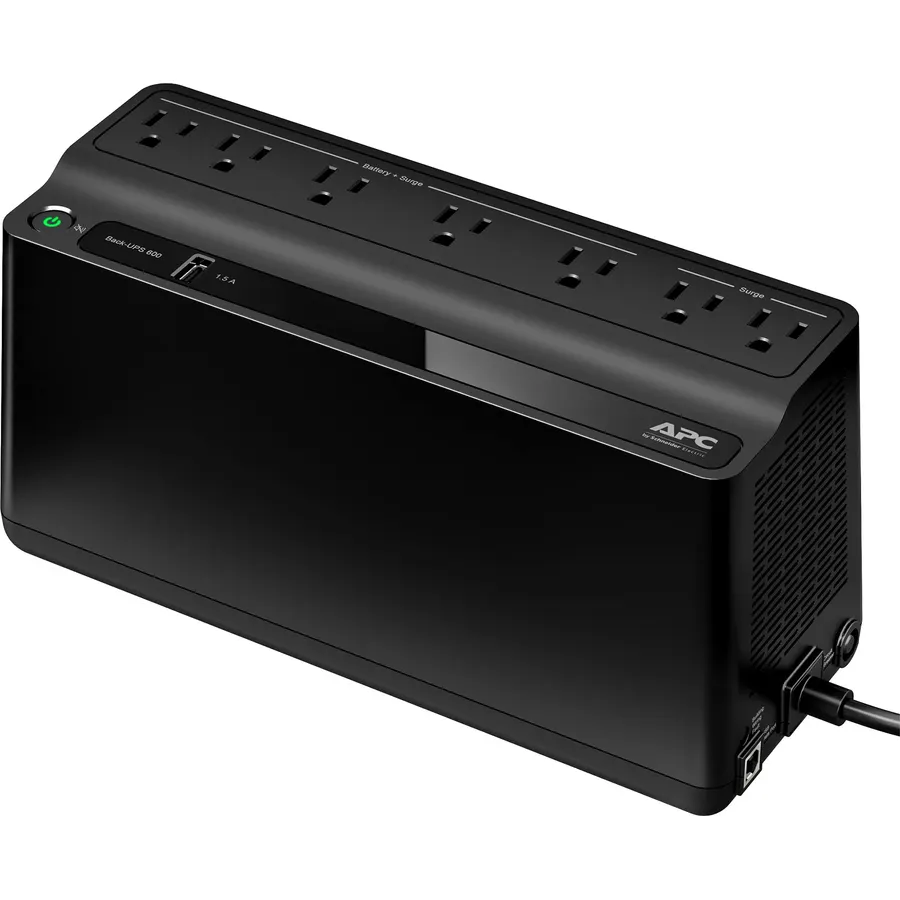
The APC BE600M1 is the UPS most households should start with, and the one most of them do: more than 29,000 owners rate it 4.5 stars after years of use. It gives you five outlets that stay live on battery for a PC, a monitor, a router, a modem and a NAS, two more surge-only outlets for a printer or a lamp, and a USB port that charges a phone while the power is out. The 600VA/330W rating and roughly 23 minutes of runtime at 100 watts are sized for a home office or a networking shelf, not for a gaming rig pulling 400 watts, and the simulated sine wave output means some Active PFC power supplies will click over to battery more often than they should. When the battery wears out in three to five years you replace a cartridge, not the unit. It is unglamorous and it is exactly right for most desks.
- More than 29,000 owners at 4.5 stars, the most-reviewed UPS here
- Five battery-backed outlets plus a USB port for a phone
- Compact enough for a desk or a shelf
- Battery swaps in minutes
- 330 watts is not enough for a gaming PC under load
- Simulated sine wave; not ideal for Active PFC supplies
- Audible alarm can be startling until you mute it
CyberPower CP1500PFCLCD PFC Sinewave UPS Battery Backup and Surge Protector
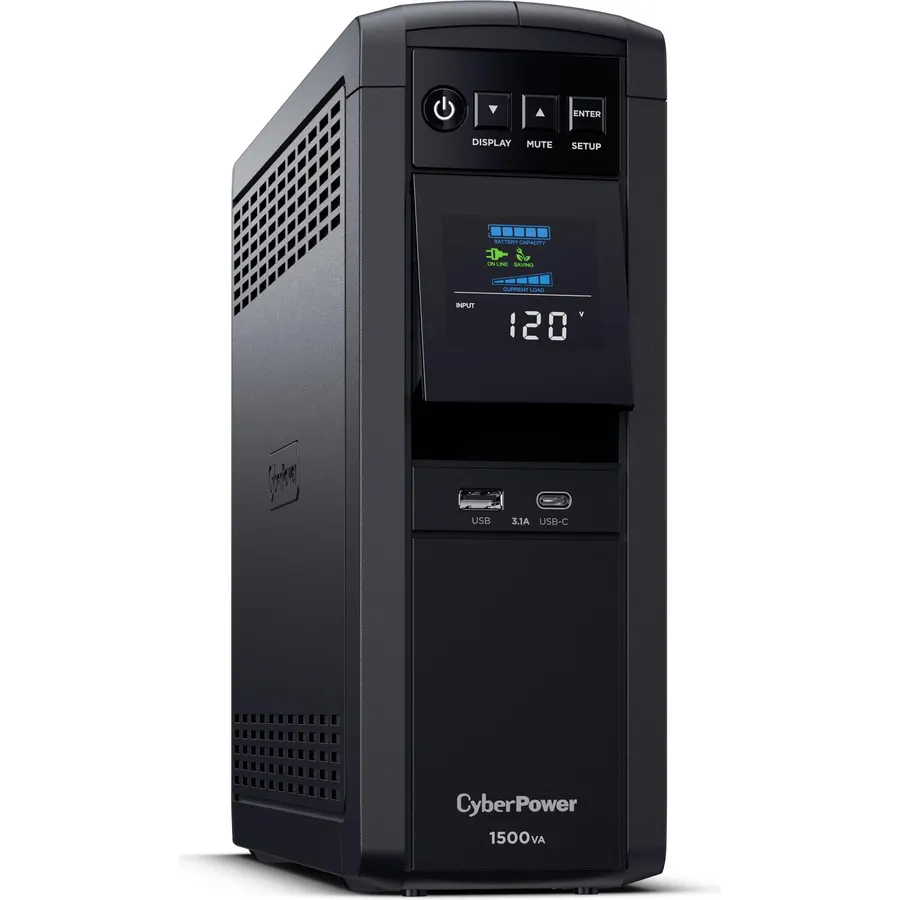
The CyberPower CP1500PFCLCD is the UPS to buy for a gaming PC, a video-editing workstation or a desk with two big monitors. Its 1000-watt pure sine wave output is what modern Active PFC power supplies expect, so the PC will not hiccup when the UPS takes over, and the line-interactive design with automatic voltage regulation corrects sagging or high mains voltage without touching the battery, which is most of what a UPS actually does in a year. Six battery-backed outlets and six surge-only ones cover a whole desk, and there are USB-A and USB-C charging ports on the front. The colour LCD shows load, runtime and battery health, and CyberPower’s software shuts the PC down cleanly when the battery runs low. It is a mini-tower that weighs as much as a small PC and costs accordingly, but about 11,400 owners give it 4.6 stars, and the three-year warranty covers the battery.
- 1000 watts and a true sine wave for Active PFC power supplies
- Automatic voltage regulation fixes brownouts without using the battery
- Twelve outlets, six of them battery-backed, plus USB-A and USB-C
- About 11,400 owners at 4.6 stars
- Mini-tower size and real weight
- Costs two to three times the BE600M1
- Fan and relay clicks are audible in a quiet room
APC Battery Backup 650VA/390W Uninterruptible Power Supply for PC, BE650G1
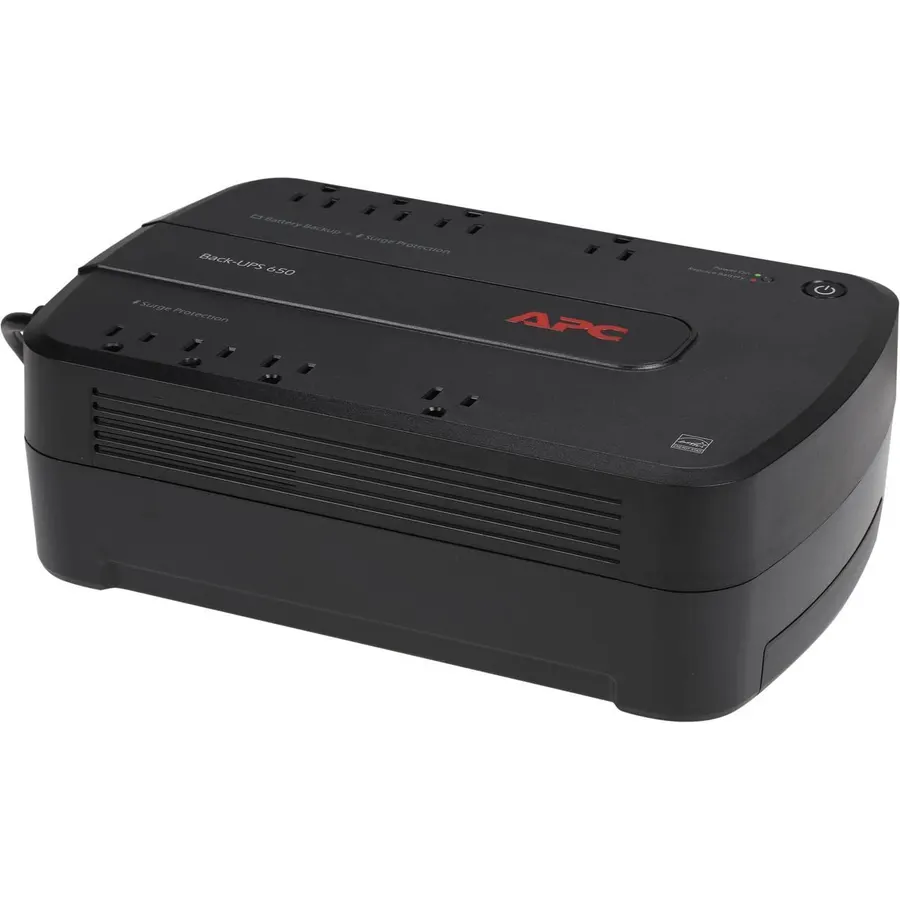
The APC BE650G1 is the BE600M1’s slightly bigger sibling with a different outlet split: 650VA and 390 watts, eight outlets instead of seven, but only four of them battery-backed, with four surge-only. That makes it the better choice for a desk with several wall-wart adapters that need space more than battery, such as a monitor, a desk lamp, a printer and speakers alongside a PC and a router, and the slightly higher watt rating gives a small desktop more margin. It gives up the USB charging port, and it has the same simulated sine wave as the other standby APC units, so it is not the pick for an Active PFC gaming supply. About 4,100 owners rate it 4.6 stars, the APC alarm can be muted, and the battery is a user-replaceable cartridge backed by APC’s three-year warranty and equipment protection policy.
- 390 watts, a little more headroom than the BE600M1
- Eight well-spaced outlets for wall-wart adapters
- About 4,100 owners at 4.6 stars
- Mutable alarm and clear status lights
- Only four battery-backed outlets
- No USB charging port
- Simulated sine wave
CyberPower EC850LCD Ecologic UPS Battery Backup and Surge Protector
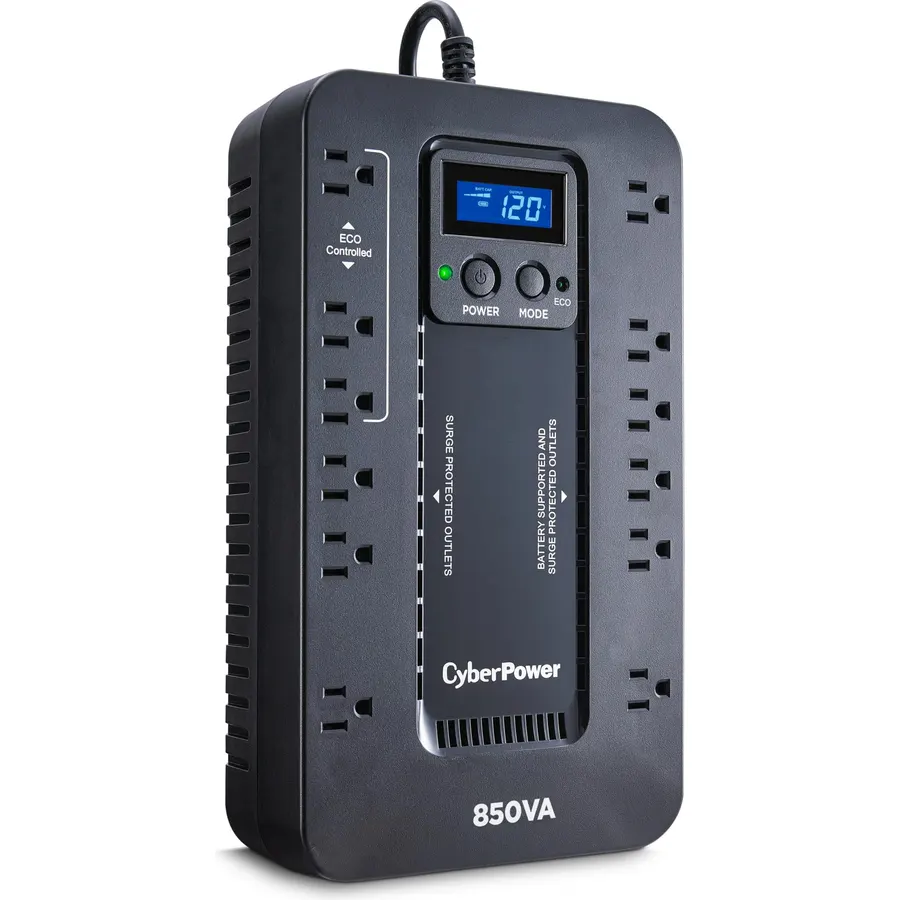
The CyberPower EC850LCD is the desk UPS that also trims your electricity bill. Twelve outlets split into six battery-backed and six surge-only, and three of the surge-only outlets are ECO controlled: when the UPS detects that the PC has gone to sleep or switched off, it cuts power to whatever is on those outlets, so the monitor, speakers and printer stop drawing standby power until the PC wakes. The LCD shows load and battery state, it is compact for an 850VA unit, and the three-year warranty includes the battery. Like the APC standby units it outputs a simulated sine wave, so it suits a basic desktop, a home-office PC and networking gear rather than a gaming rig. About 6,800 owners rate it 4.4 stars, slightly below the CP1500 and the APC picks, with the ECO outlets occasionally confusing people who plug the wrong thing into them.
- Twelve outlets, six on battery
- ECO outlets switch off monitors and speakers when the PC sleeps
- Compact for an 850VA unit
- About 6,800 owners at 4.4 stars
- Simulated sine wave, not for Active PFC supplies
- Lower rating than the other CyberPower picks
- Watt rating is modest for the VA figure
CyberPower ST425 Standby UPS Battery Backup and Surge Protector
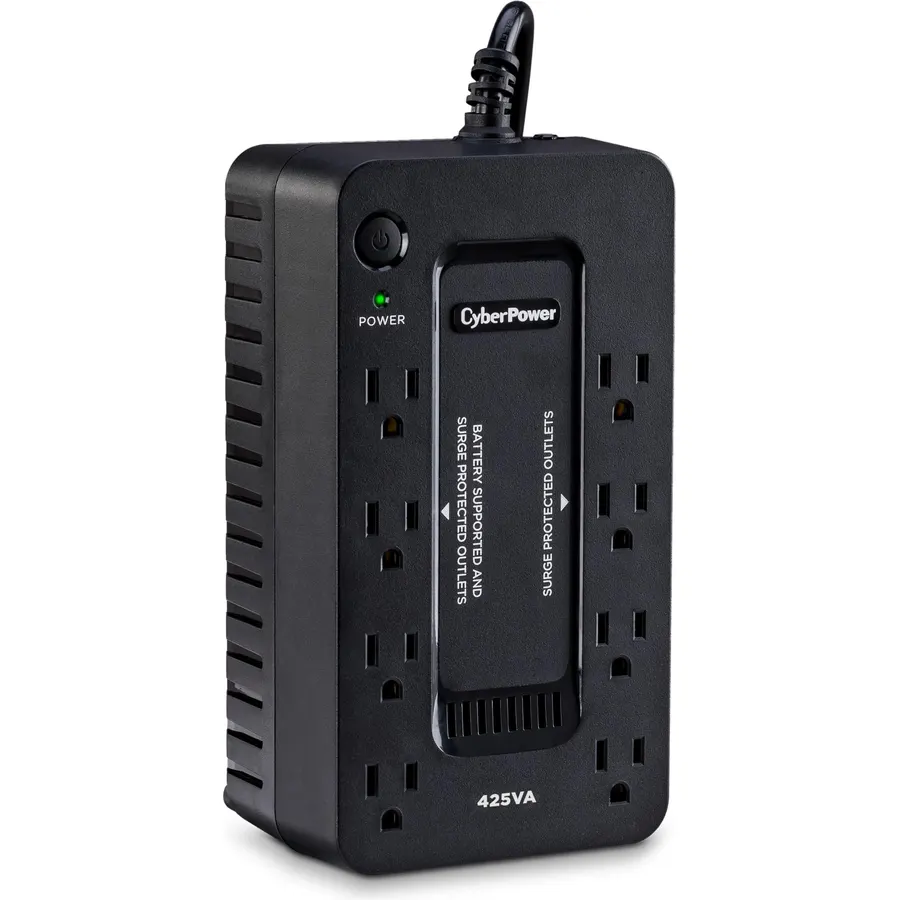
The CyberPower ST425 is the UPS you buy for the networking shelf: a router, a modem, a mesh node and a smart-home hub together draw 20 to 40 watts, and this 425VA unit will keep them running for a long time through an outage so the Wi-Fi, the security cameras and the phones stay up. It has eight outlets, four of them battery-backed and spaced for adapters, a wiring-fault light, and a high-efficiency design that wastes little power of its own. It is not a PC UPS: 260 watts covers a small desktop and a monitor for a few minutes, enough to save and shut down, but no more. There is no display and no USB charging port, which is how it reaches its price. About 5,400 owners rate it 4.4 stars, and the three-year warranty includes the battery.
- Keeps a router, modem and smart-home hub online through an outage for very little money
- Eight outlets with space for adapters
- Efficient design draws little power itself
- About 5,400 owners at 4.4 stars
- 260 watts and a short runtime with a PC attached
- No display or USB port
- Simulated sine wave
APC BR1500MS2 Pure Sine Wave UPS Battery Backup & Surge Protector
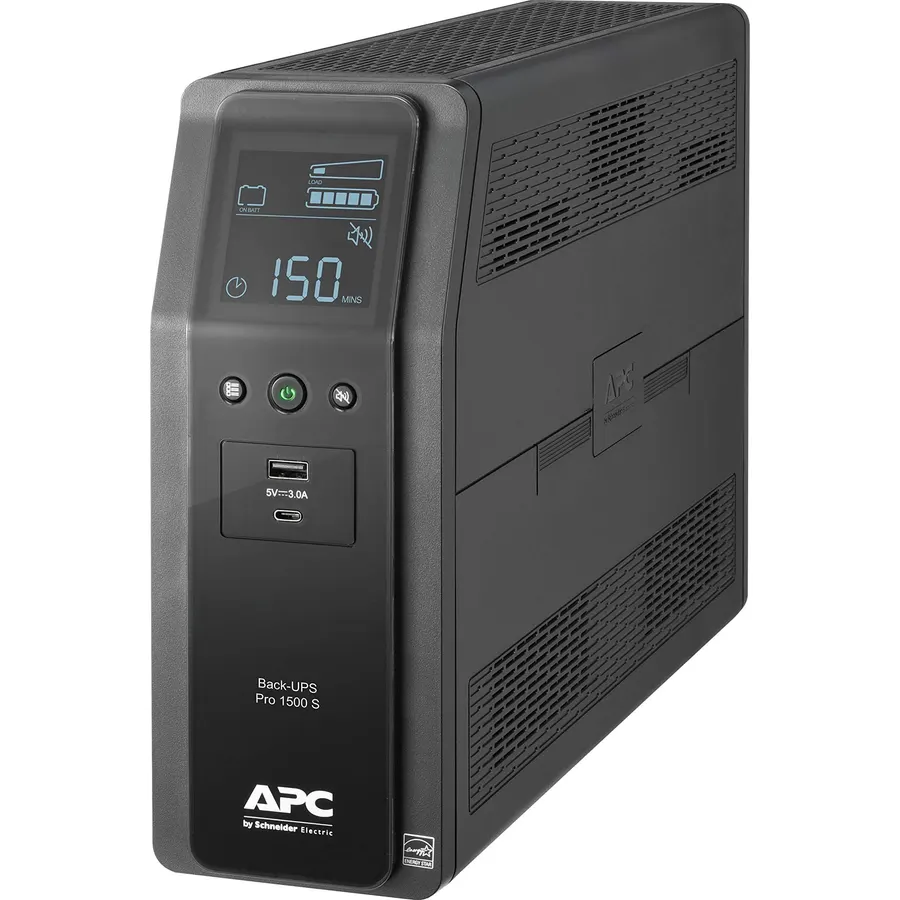
The APC BR1500MS2 is APC’s answer to the CyberPower CP1500: 1500VA, 900 watts, a true pure sine wave and automatic voltage regulation, in a unit that also protects the coax and Ethernet lines feeding your modem and router from surges. Six battery-backed outlets and four surge-only ones cover a full workstation, two front USB ports (one USB-C) charge devices without using an outlet, and the quoted 73 minutes at 100 watts is the longest runtime of any pick here, which translates to a long time keeping a NAS and a router alive. It costs more than the CyberPower for slightly fewer watts, and it is just as big and heavy, but APC’s cartridge-swap battery and three-year warranty are the same story as the smaller APC units, and about 3,500 owners rate it 4.5 stars. Pick it over the CyberPower if you want the data-line protection or prefer APC’s software.
- Pure sine wave and AVR for gaming PCs and NAS boxes
- Longest quoted runtime here: 73 minutes at 100 watts
- Surge protection for coax and Ethernet lines too
- About 3,500 owners at 4.5 stars
- The most expensive pick on the page
- 900 watts is a little under the CyberPower CP1500
- Large and heavy
APC Battery Backup 550VA/330W Uninterruptible Power Supply for PC, BE550G
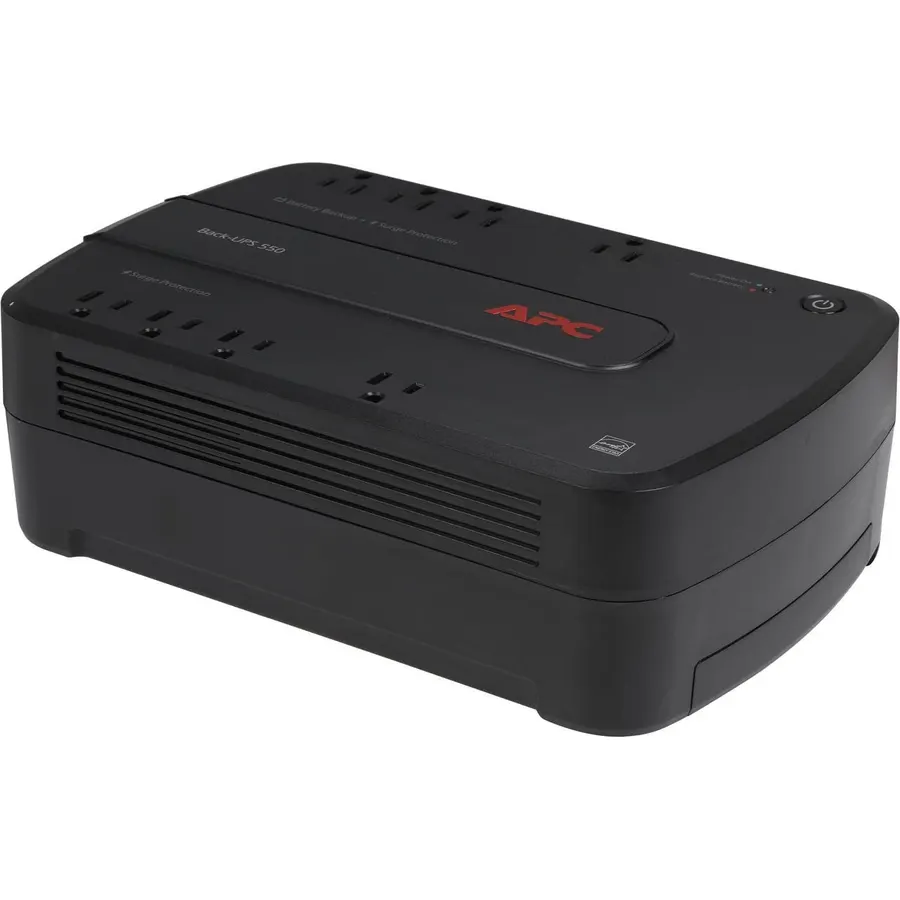
The APC BE550G is the long-serving small APC: 550VA and 330 watts, eight outlets with four on battery and four surge-only, a mutable alarm and a replaceable RBC17 battery cartridge. It has been on sale long enough to have about 4,000 reviews at 4.4 stars, and its appeal is simple: the same watt rating as the BE600M1 in a layout with more surge-only outlets for peripherals and adapters. It lacks a USB charging port and a display, and the BE650G1 above offers 60 more watts for a modest premium, so it ranks below both. It remains a sensible buy for a basic desktop and a monitor, or for a second shelf of networking gear, and APC’s three-year warranty and equipment protection policy apply. Like all the standby APC units here, it outputs a simulated sine wave.
- Eight well-spaced outlets in a compact unit
- Same 330 watts as the BE600M1 with more surge-only outlets
- A decade of owner history: about 4,000 reviews at 4.4 stars
- Replaceable battery cartridge
- Only four battery-backed outlets
- No USB charging port or display
- Older design; the BE650G1 gives more watts for a little more
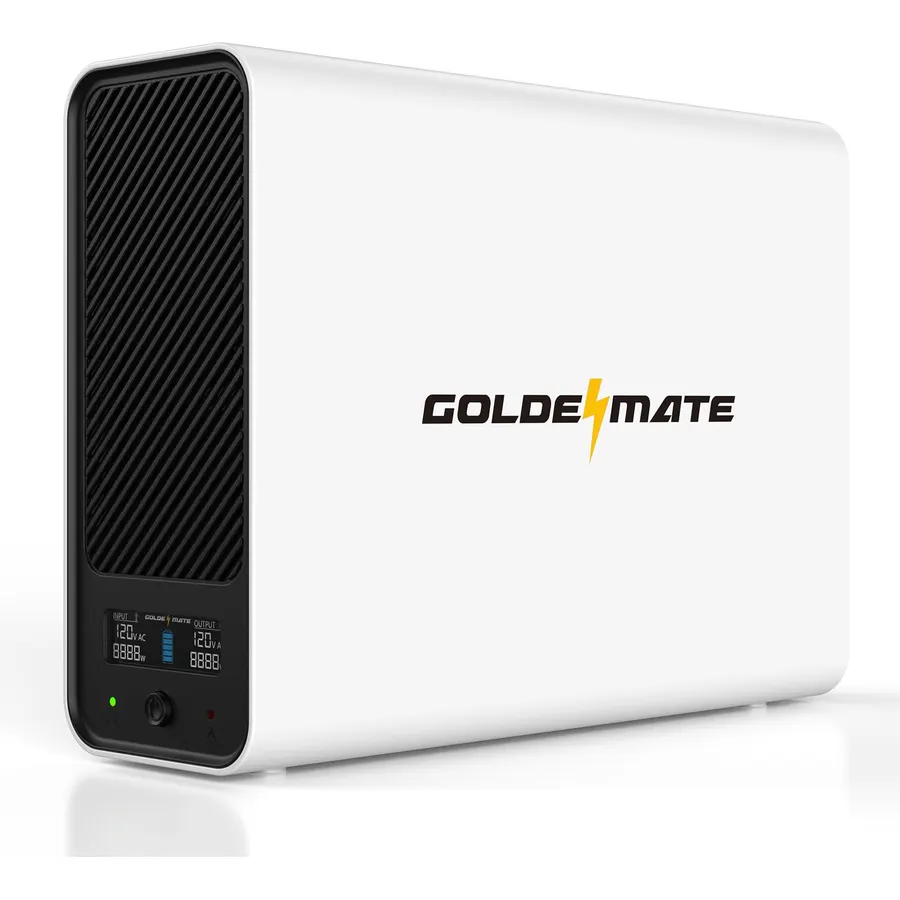
The GOLDENMATE 1000VA is the pick for anyone tired of replacing lead-acid UPS batteries every three years. Its lithium iron phosphate cell is rated for more than ten years and 5,000 charge cycles, it is managed by a battery management system that stops charging and discharging outside safe limits, and it makes the unit noticeably lighter than a lead-acid UPS of the same 1000VA/600W rating. The output is a pure sine wave, so it suits an Active PFC PC or a NAS, and an LCD shows battery and power status with a buzzer you can mute. It has eight surge-protected outlets, fewer than the 1500VA units, and GOLDENMATE is a newer brand than APC or CyberPower, which shows in a smaller review base of about 940 owners at 4.3 stars. For a long-life, set-and-forget UPS on a modest desk, it is the modern option.
- Lithium iron phosphate battery rated for a decade and 5,000 cycles
- Pure sine wave at 600 watts
- Lighter than a lead-acid unit of the same capacity
- About 940 owners at 4.3 stars
- Smaller brand with a shorter track record than APC or CyberPower
- Fewer outlets than the 1500VA units
- Lowest rating of the picks here
Compare the picks
| Product | Capacity | Waveform | Outlets (battery / surge-only) | Runtime at 100W | Owner rating | Our score | |
|---|---|---|---|---|---|---|---|
| APC BE600M1APC | 600VA / 330W | Simulated | 5 / 2, plus USB | About 23 min | 4.5 (29,000+) | 9.0 | See price |
| CyberPower CP1500PFCLCDCyberPower Systems | 1500VA / 1000W | Pure sine, AVR | 6 / 6, USB-A and C | Not quoted | 4.6 (11,400+) | 9.2 | See price |
| APC BE650G1APC | 650VA / 390W | Simulated | 4 / 4 | Roughly 20 to 30 min | 4.6 (4,100+) | 9.2 | See price |
| CyberPower EC850LCDCyberPower | 850VA | Simulated | 6 / 6 (3 ECO) | Not quoted | 4.4 (6,800+) | 8.8 | See price |
| CyberPower ST425CyberPower | 425VA / 260W | Simulated | 4 / 4 | Not quoted | 4.4 (5,400+) | 8.8 | See price |
| APC BR1500MS2APC | 1500VA / 900W | Pure sine, AVR | 6 / 4, USB-A and C | Up to 73 min | 4.5 (3,500+) | 9.0 | See price |
| APC BE550GAPC | 550VA / 330W | Simulated | 4 / 4 | Roughly 20 to 30 min | 4.4 (4,000+) | 8.8 | See price |
| GOLDENMATE 1000VA lithiumGOLDENMATE | 1000VA / 600W | Pure sine | 8 surge-protected | Not quoted | 4.3 (940+) | 8.6 | See price |
How big a UPS do you need?
Add up the watts of everything you want on battery, not the VA. A router, modem and smart hub draw 20 to 40 watts and will run for an hour or more on the ST425 or the BE600M1. A basic desktop and a monitor draw 100 to 200 watts and get ten to twenty minutes on a 600VA unit, which is enough to save and shut down. A gaming PC with a current graphics card can pull 400 to 600 watts under load, which exceeds the 330-watt small units entirely and leaves even the 1000-watt CP1500 with only a few minutes; for those, the goal is a clean shutdown, not continued play. Leave a laser printer off the UPS entirely; its heater spikes can trip any of them.
Pure sine wave or simulated?
Mains power is a smooth sine wave. Cheaper standby UPS units (the APC BE series, the CyberPower ST425 and EC850LCD) produce a stepped approximation when they switch to battery, which is fine for routers, modems, monitors and most basic desktops. Power supplies with Active Power Factor Correction, which means most gaming PCs, workstations and NAS boxes built in the last decade, can click, buzz or even shut down on a simulated wave. The CyberPower CP1500PFCLCD, APC BR1500MS2 and GOLDENMATE output a pure sine wave and are the right choice for those loads. The two 1500VA units also add automatic voltage regulation, which corrects brownouts without using the battery and is the feature you will benefit from most often.
Batteries, software and alarms
Lead-acid UPS batteries last three to five years and every APC and CyberPower pick here uses a cartridge you can swap yourself; budget for one replacement over the life of the unit. The GOLDENMATE’s lithium iron phosphate cell is rated for ten years and 5,000 cycles, which removes that chore at the cost of a smaller brand’s track record. Connect the UPS to your PC with the included USB cable and install APC PowerChute or CyberPower PowerPanel so the computer shuts itself down before the battery runs flat. Every unit here beeps on battery; all of them let you mute it, and you will want to.
How long will a UPS run my computer?
It depends on the load. The APC BE600M1 quotes about 23 minutes at 100 watts, and the APC BR1500MS2 up to 73 minutes at the same load. A gaming PC drawing 400 watts will get only a few minutes on any consumer UPS, which is enough to save work and shut down cleanly, not to keep gaming.
Do I need a pure sine wave UPS?
If the UPS will power a gaming PC, a workstation or a NAS with an Active PFC power supply, yes: the CyberPower CP1500PFCLCD, APC BR1500MS2 or GOLDENMATE lithium. For a router, modem, monitor or basic desktop, a simulated sine wave unit like the APC BE600M1 is fine.
What is the difference between VA and watts on a UPS?
Watts is real power and the number that matters for your equipment. VA is apparent power and is always higher; a 1500VA unit might be 900 or 1000 watts. Size the UPS by the watts your devices draw, with headroom.
Can I plug a laser printer or a space heater into a UPS?
No. Laser printers and heaters draw large spikes that overload a consumer UPS and can trip it or damage it. Plug them into the surge-only outlets at most, and preferably into a separate surge protector.
How often do UPS batteries need replacing?
Lead-acid batteries in the APC and CyberPower units typically last three to five years; the UPS will warn you and the cartridge swaps in minutes. The GOLDENMATE lithium iron phosphate battery is rated for more than ten years and 5,000 cycles.
Prices and stock change daily. The buttons above open Amazon so you always see the current price. We may earn a commission if you buy through them, at no extra cost to you.
Do Best Deal is a participant in the Amazon Services LLC Associates Program. As an Amazon Associate we earn from qualifying purchases. If you buy through links on this site we may earn a commission, at no extra cost to you. Learn more.